
AI lab generates yeast hypotheses and runs experiments but is not fully autonomous
This digest was compiled by AI from multiple sources — links to the originals are below.
Researchers in Sweden and the UK built an AI system that formulates hypotheses, plans experiments, and instructs robots to test them on yeast. The system generated 1,933 predictions and identified previously undescribed interactions between amino acids and chemical stressors. It also used failed experiments to refine its next steps.
Key Facts
- The system generated 1,933 testable predictions about the effects of 16 amino acids on yeast resistance to chemical stressors.
- The AI used GPT-4o to plan experiments and translate them into instructions for robotic lab equipment.
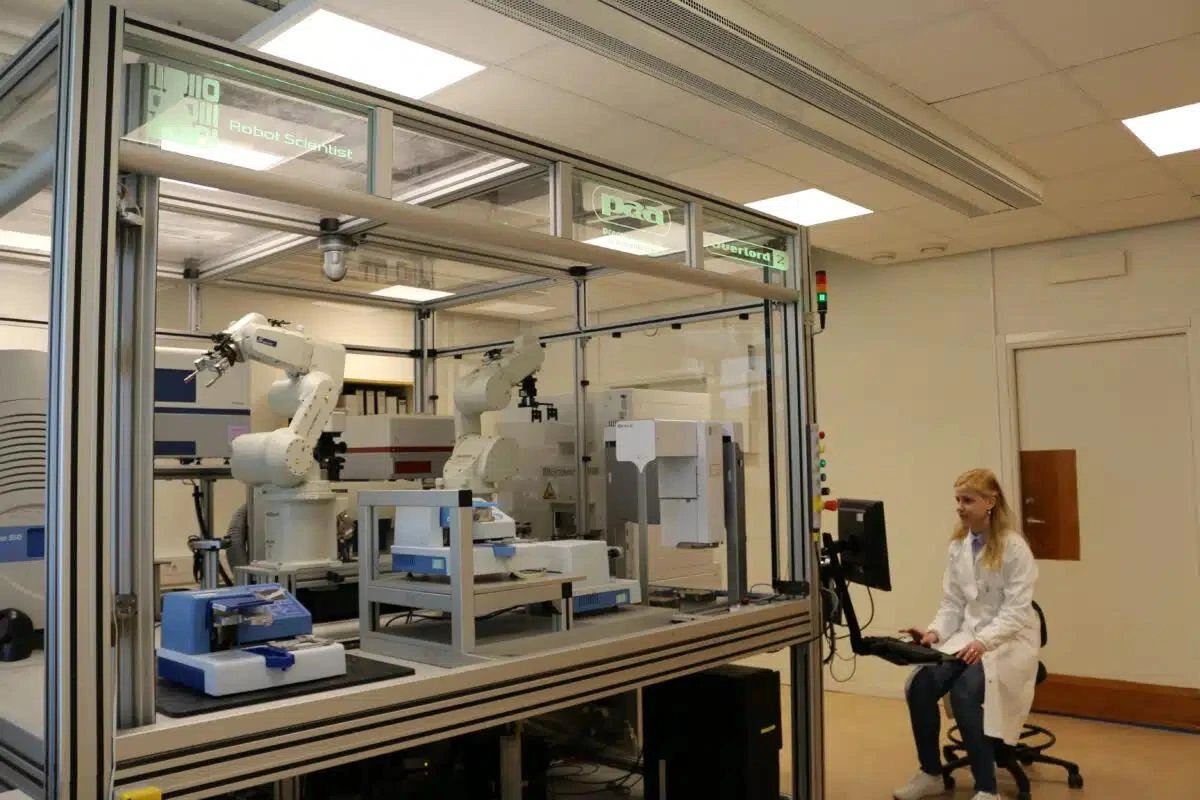
- Robots mixed substances, grew cultures for about 20 hours, and measured growth changes and intracellular concentrations.
- The system confirmed that arginine enhances caffeine's effect on yeast, while glutamate increases sensitivity to spermine.
- The laboratory is not yet fully autonomous, according to the researchers.
System Architecture
Researchers from Sweden and the UK built the system around a database of nearly 60,000 facts about yeast, linking genes, chemicals, and observable traits. A pattern-search algorithm identified stable relationships in the database and matched them with experimental data. Several AI agents then took over: one based on GPT-4o drafted an experiment plan, a second selected the best option, and a third translated it into equipment instructions. Each variant was tested on ten separate cultures, and results were recorded in a shared database along with hypotheses and plans.
Experimental Findings
The system predicted that arginine would enhance caffeine's effect: arginine alone slightly reduced yeast growth, caffeine cut it by more than half, and the combination was stronger. Another result showed that glutamate increases yeast sensitivity to spermine, an interaction the authors consider insufficiently studied. The researchers suggest the glutamate effect may involve a substance the cell produces from it rather than glutamate itself. Some initial predictions failed: lysine was expected to worsen yeast resistance to high sugar concentration but instead protected cells. For formic acid, the system obtained several nonspecific results where the control substance acted no weaker than the tested amino acid.
Autonomy Limits
The system used failed experiments to inform its next step, rather than treating them as confirmations of the original hypotheses. Despite this iterative capability, the laboratory is not yet fully autonomous.
1 source
Time · lag behind first