
Senate Deal to Speed Energy Permitting Faces Environmentalist Split
This digest was compiled by AI from multiple sources — links to the originals are below.
A bipartisan Senate bill to speed permitting for energy projects is set for a lame-duck vote after the midterm elections. The measure aims to clear grid interconnection queues but has divided environmental advocates over state and tribal authority. Supporters say it could connect tens of gigawatts of clean energy.
Key Facts
- The bill is 417 pages long and will not be voted on until after the midterm elections.
- Sen. Sheldon Whitehouse, D-R.I., and Sen. Shelley Moore Capito, R-W.Va., co-authored the measure.
- Rob Gramlich, president of Grid Strategies, says the bill could enable tens of gigawatts of clean energy to connect to the grid.
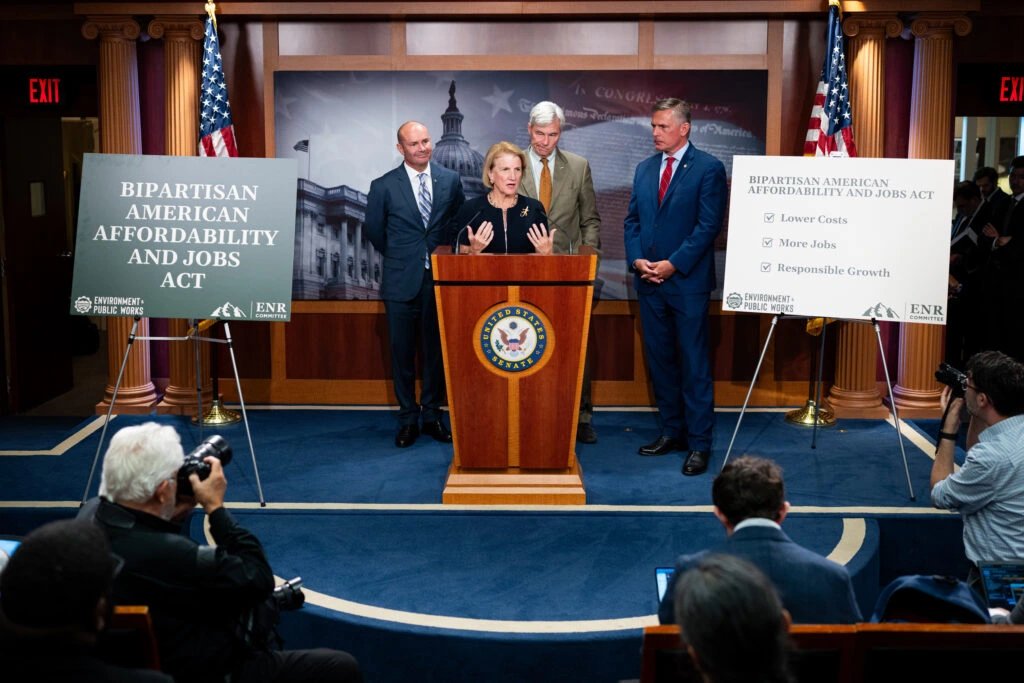
- The bill is called the Bipartisan American Affordability and Jobs Act of 2026.
Legislative Path
The bill will be considered in the lame-duck session of Congress after November's midterm elections. It requires 60 Senate votes to overcome a filibuster. The measure is co-authored by Sen. Sheldon Whitehouse, D-R.I., and Sen. Shelley Moore Capito, R-W.Va. The bill is titled the Bipartisan American Affordability and Jobs Act of 2026.
Environmental Divide
Some environmental advocates argue the bill would weaken state and tribal government authority. Others say it would allow pipelines and other fossil fuel projects to use a streamlined process. Pete Wyckoff of Evergreen Action supports the bill, saying America must build clean energy faster. Sen. Whitehouse said the bill is a compromise that will result in a brighter, cleaner, more affordable future.
Grid Impact
Rob Gramlich of Grid Strategies said the bill's technology-neutral provisions would enable many tens of gigawatts of clean energy to be connected. The bill aims to address long queues for interconnection to the grid. Sen. Whitehouse said passing the bill would flood the grid with clean, affordable energy and make data centers pay their fair share.
2 sources
Time · lag behind first