
Cascadia and San Andreas faults may rupture minutes apart, study finds
This digest was compiled by AI from multiple sources — links to the originals are below.
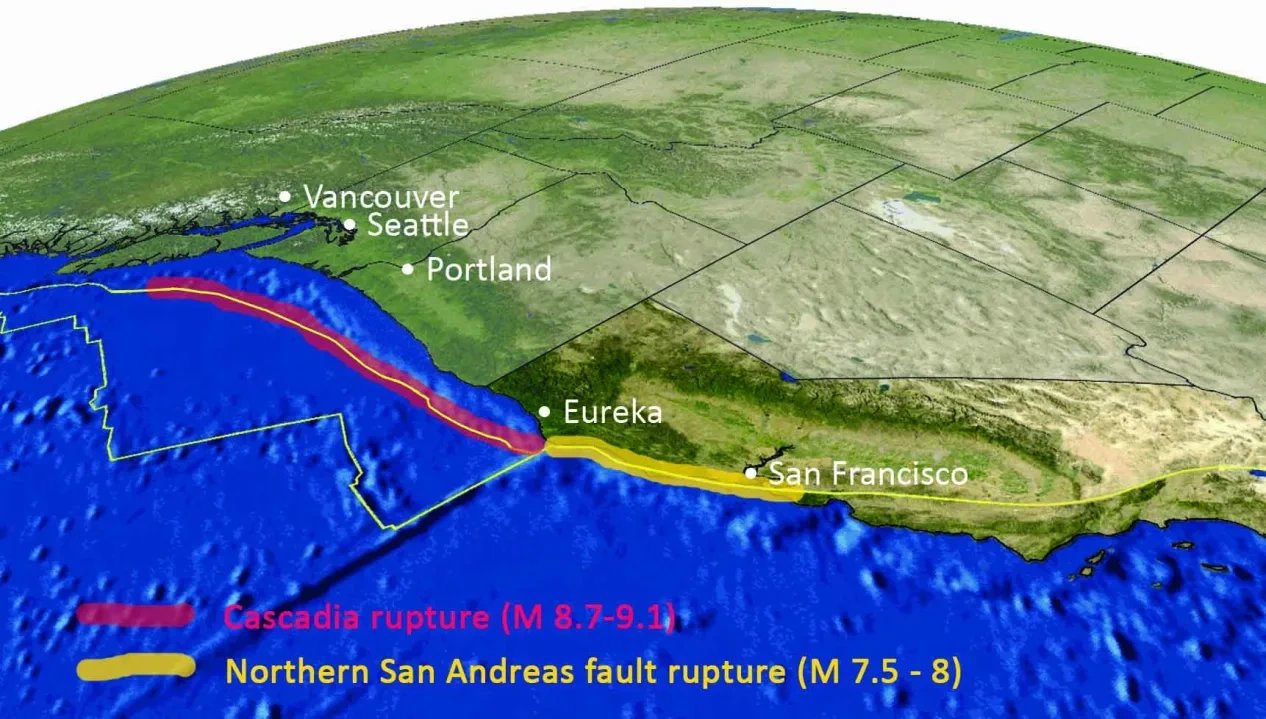
A new study suggests the Cascadia subduction zone and San Andreas fault can rupture within minutes to hours of each other. Researchers identified three such episodes in the past 1,500 years, most recently around 1700. The finding raises concerns about simultaneous major earthquakes affecting multiple West Coast cities.
Key Facts
- The study examined deep-sea sediment cores spanning about 3,100 years of geologic history.
- Researchers identified three events in the past 1,500 years when Cascadia and the northern San Andreas fault ruptured within minutes to hours of each other.
- The most recent synchronized rupture occurred around 1700.
- Chris Goldfinger, a marine geologist at Oregon State University, led the study.
Sediment Core Analysis
Goldfinger and his colleagues analyzed deep-sea sediment cores containing about 3,100 years of geologic history. The cores preserve turbidites, layers formed by underwater landslides that can be triggered by powerful earthquakes. By comparing turbidite layers from the Cascadia and San Andreas systems, the team found striking similarities in timing and structure. These patterns suggest major earthquakes on the two faults have sometimes occurred unusually close together.
Synchronized Rupture Episodes
The team identified three events during the past 1,500 years when Cascadia and the northern San Andreas appear to have ruptured within minutes to hours of each other. The most recent of those episodes occurred around 1700. Pinning down the exact amount of time between ancient earthquakes is difficult, Goldfinger said. Only one previous example of synchronized fault behavior has been observed: earthquakes in Sumatra that occurred three months apart in 2004 and 2005.
Disaster Preparation Implications
Even one major rupture along Cascadia or the San Andreas could create an enormous emergency response challenge. If both systems ruptured within a short period, multiple major metropolitan areas could face severe damage at nearly the same time. Goldfinger said an earthquake on one fault alone would draw down the resources of the whole country to respond. If both went off together, San Francisco, Portland, Seattle, and Vancouver could all be in an emergency situation in a compressed timeframe.
2 sources
Time · lag behind first