
Kyrgyzstan's Japarov urges UN to hold sole right to impose sanctions
This digest was compiled by AI from multiple sources — links to the originals are below.
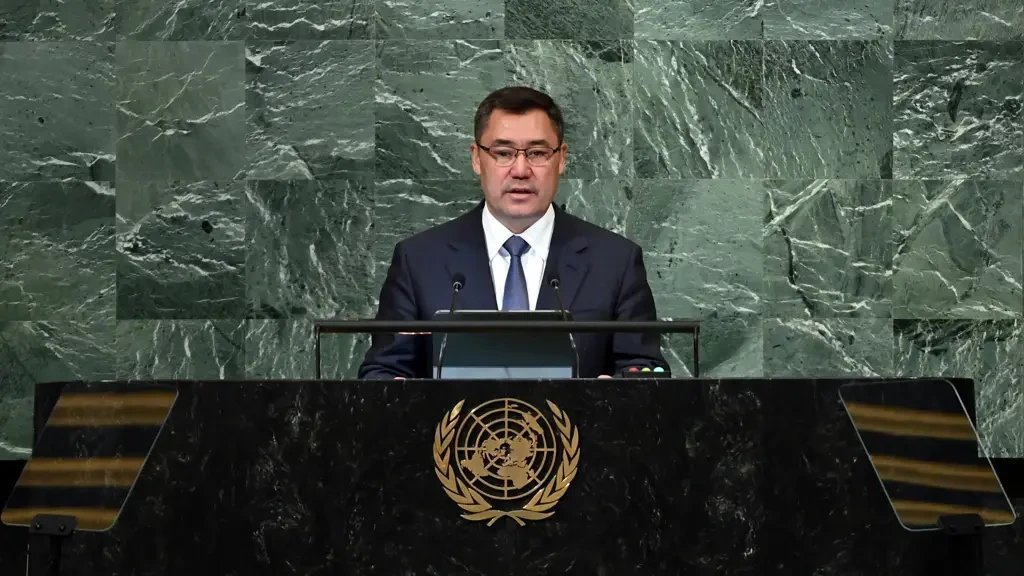
Kyrgyz President Sadyr Japarov called on the UN General Assembly to grant the United Nations the exclusive right to impose sanctions on states. Speaking at the 81st session in New York on September 22, he proposed a mandatory pre-review mechanism to assess humanitarian, economic and social consequences. The initiative comes as Kyrgyzstan argues unilateral sanctions are used to interfere in sovereign states' internal affairs.
Key Facts
- Kyrgyz President Sadyr Japarov proposed granting the UN the exclusive right to impose sanctions on states during his address to the 81st session of the UN General Assembly on September 22.
- Japarov called for a mandatory pre-review mechanism to assess the humanitarian, economic and social consequences of proposed sanctions.
- He also proposed a unified international monitoring mechanism under UN auspices for regular review of sanctions.
- Japarov said states initiating sanctions should specify their legal basis, necessity, goals and conditions for lifting them.
- He stated that unilateral sanctions negatively affect small developing states and are sometimes used as a tool of pressure and interference in internal affairs.
The Proposal
Kyrgyz President Sadyr Japarov proposed that the right to impose sanctions against states be granted exclusively to the United Nations. He made the remarks on September 22 during the general debate of the 81st session of the UN General Assembly in New York. Japarov said decisions on sanctions should be made in accordance with the UN Charter and within the powers of the Security Council. He proposed creating a mandatory mechanism for preliminary review of sanctions measures to assess their possible humanitarian, economic and social consequences. Japarov also called for a unified international monitoring mechanism under UN auspices for regular review of sanctions.
Rationale and Impact
Japarov argued that unilateral sanctions are sometimes used by individual countries as a tool of interference in the internal affairs of sovereign states. He noted that the negative economic and social consequences of such sanctions affect small developing countries, including Kyrgyzstan. Japarov said states initiating sanctions should indicate their legal basis, explain their necessity and goals, and define criteria and conditions for lifting them. He stated that granting the UN exclusive sanctioning authority would strengthen the organization's central role in international peace and security. Japarov added that this would reduce the risk of sanctions being used by individual states for political or economic gain.
3 sources
Time · lag behind first