
NASA scientists discover largest new impact crater in solar system on moon
This digest was compiled by AI from multiple sources — links to the originals are below.
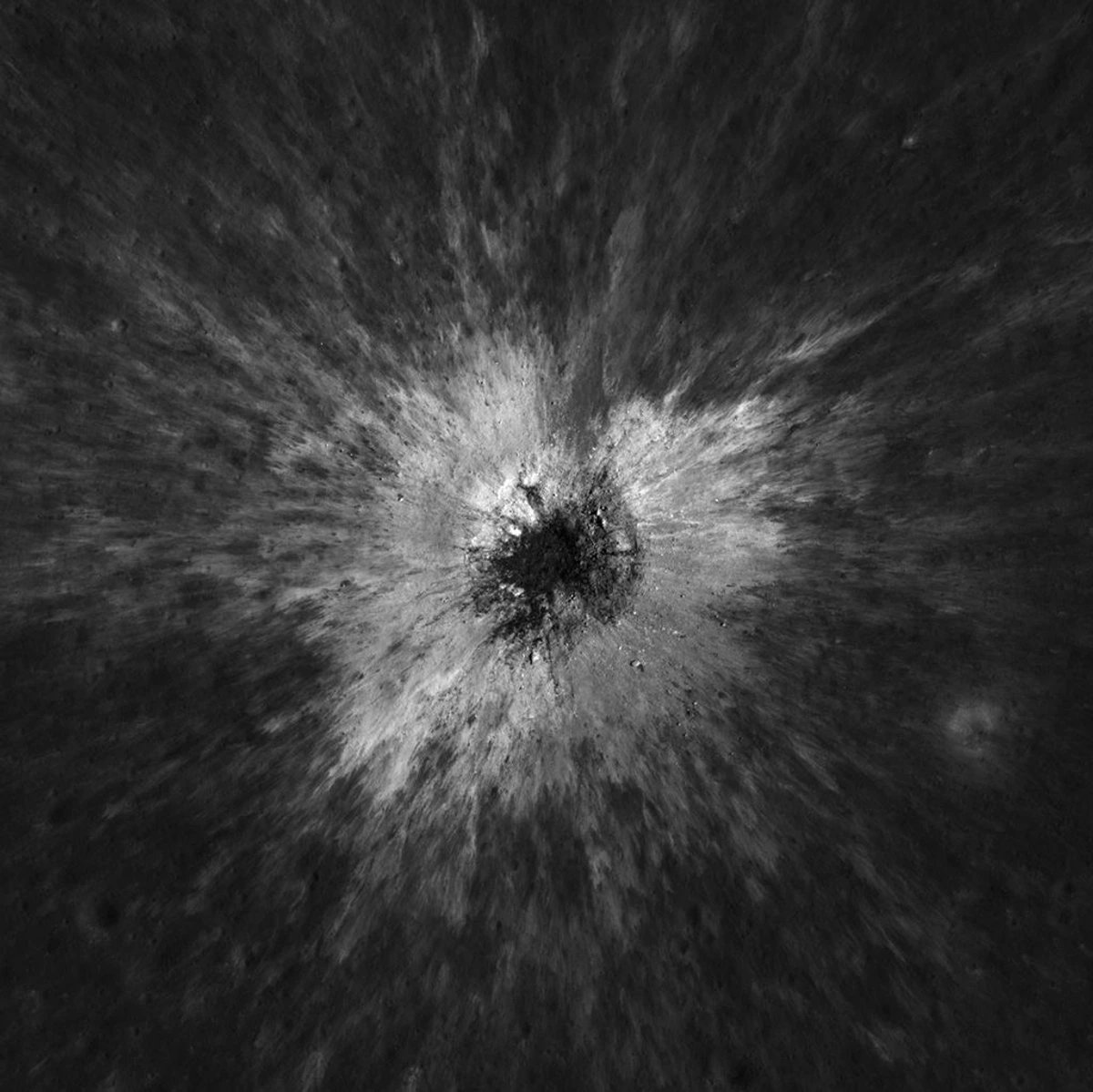
NASA scientists have discovered a 222-meter-wide impact crater on the moon, the largest newly formed crater ever found in the solar system. The crater, named McGetchin Crater, was identified by comparing images from the Lunar Reconnaissance Orbiter taken in April and May 2024. The discovery was published in Science Advances on September 22, 2026.
Key Facts
- The McGetchin Crater spans 222 meters (728 feet) across and 43 meters (141 feet) deep.
- The crater formed between April 11 and May 22, 2024, on the eastern limb of the moon.
- An impact of this size is estimated to occur once every 132 years.
- The crater is named after Tom McGetchin, former director of the Lunar Science Institute, who died in 1979.
- The discovery was made by Robert Wagner, an image processing specialist at Intuitive Machines, while analyzing Lunar Reconnaissance Orbiter data.
Discovery Details
Robert Wagner, an image processing specialist for Intuitive Machines, identified the crater while comparing Lunar Reconnaissance Orbiter images from April and May 2024. The crater is located on the eastern edge of the moon and measures 222 meters across and 43 meters deep. Wagner described his reaction: "I just stopped, dropped everything, and started looking into what that spot was." The discovery was published in the journal Science Advances on September 22, 2026.
Crater Characteristics
The McGetchin Crater is the largest newly formed crater ever discovered in the solar system. Scientists estimate that an impact of this size occurs only once every 132 years. Thermal imaging from the Lunar Reconnaissance Orbiter showed the crater's center glows red while the surrounding area is 16 degrees Fahrenheit cooler at night. Researchers attribute the temperature difference to less dense regolith piled around the crater, which retains less heat.
Scientific Significance
The moon's lack of atmosphere, liquid water, and plate tectonics preserves impact sites better than other bodies in the solar system. The crater is named after Tom McGetchin, former director of the Lunar Science Institute, who died in 1979. The Lunar Reconnaissance Orbiter has surveyed the entire moon monthly for the past 17 years, providing data for such discoveries.
1 source
Time · lag behind first