
Dangote refinery IPO opens as Nigeria's refining monopoly shifts
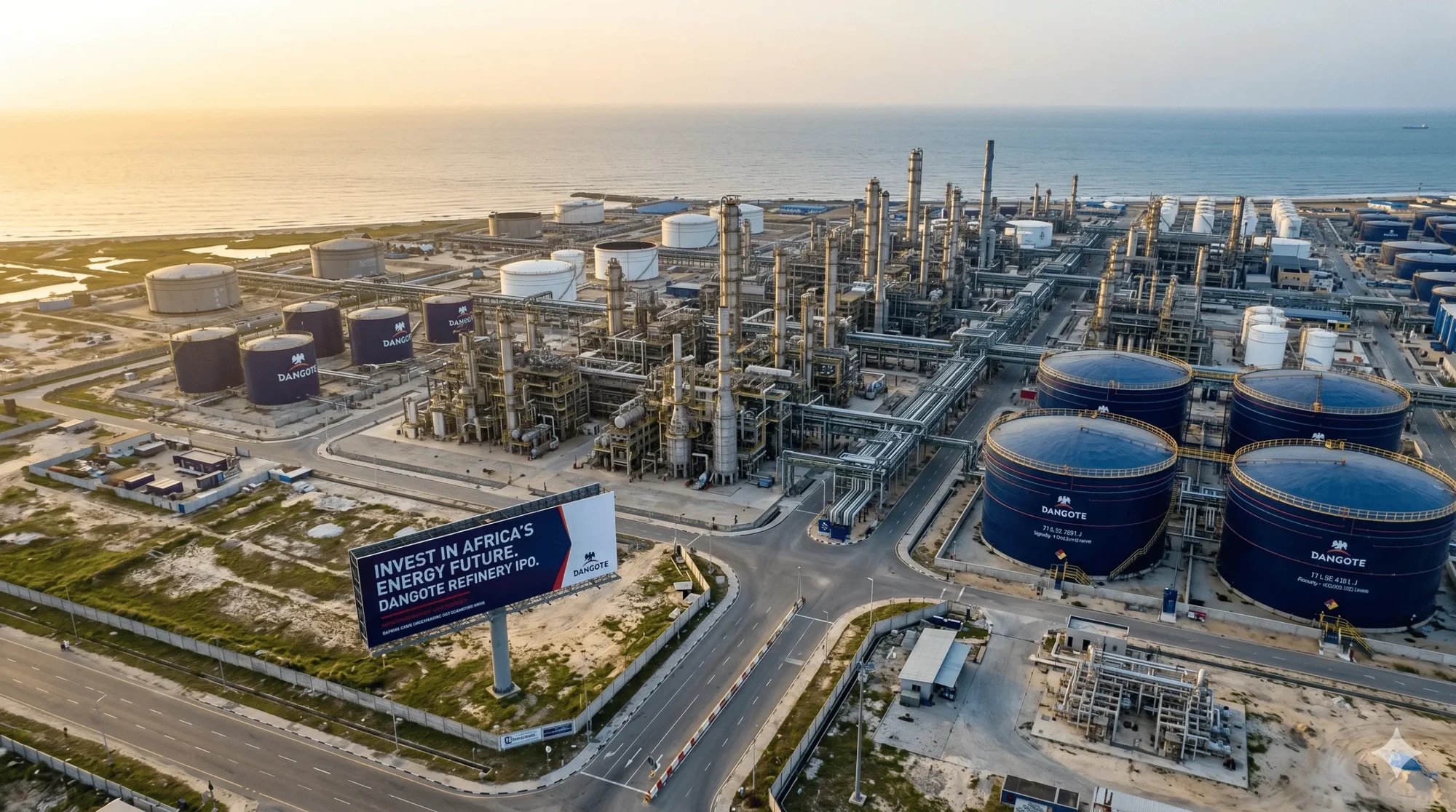
This digest was compiled by AI from multiple sources — links to the originals are below.
Dangote Petroleum Refinery opened its initial public offering on September 14, 2026, marking the largest IPO in African history. The Lagos-based refinery has a crude-processing capacity of 700,000 barrels per day and cost about $20bn to build. The IPO comes as Nigeria's state-owned refineries remain largely dormant despite over $18bn spent on rehabilitation.
Key Facts
- Dangote Petroleum Refinery opened its IPO on September 14, 2026, the largest in African history.
- The refinery has a crude-processing capacity of 700,000 barrels per day and cost approximately $20bn to build.
- Nigeria's petrol imports fell from about 400,000 barrels per day in 2024 to about 83,000bpd this year.
- State-owned refineries in Port Harcourt, Warri and Kaduna have received between $18bn and $25bn for rehabilitation over two decades but remain largely dormant.
- The government eliminated the petrol subsidy and introduced a crude-for-naira scheme for domestic refineries.
The IPO
Dangote Petroleum Refinery opened its initial public offering on September 14, 2026, in the Lekki Free Zone in Lagos. The IPO is the largest in African history, according to Al Jazeera. Dangote Group president Aliko Dangote called it the 'People's IPO' and said the company shares its prosperity with the people. The refinery was commissioned in May 2023, began diesel and jet fuel production in January 2024, and started petrol supplies in September 2024.
State Refineries' Failure
While Dangote Refinery was under construction, government-owned refineries in Port Harcourt, Warri and Kaduna struggled with corruption, weak capacity, political interference and short-term contracting. Estimates of spending on rehabilitation and turnaround maintenance over the past two decades range from more than $18bn to as much as $25bn. The refineries have remained largely dormant or operated at negligible capacity for much of the past decade. This failure forced Nigeria to depend on imports for most of its petrol and diesel, pressuring foreign exchange reserves and the national budget.
Market Shift
With large-scale domestic refining projects like Dangote, Nigeria has begun moving away from exporting crude oil while importing refined fuel. The government eliminated the petrol subsidy and introduced a crude-for-naira mechanism allowing domestic refineries to buy crude in local currency. Nigeria's petrol imports fell from about 400,000 barrels per day in 2024 to about 83,000bpd this year. The country has not eliminated its need for imported fuel, but its dependence on imports has fallen sharply.
1 source
Time · lag behind first