
Chinese cave yields Denisovan bones and tools from 167,000 years ago
This digest was compiled by AI from multiple sources — links to the originals are below.
Archaeologists from Beijing's Institute of Vertebrate Paleontology and Paleoanthropology have recovered Denisovan bones and tools from Bianfu Cave in Yunnan Province, China. The remains, dated to 167,000–134,000 years ago, provide the first firm link between the cave and the ancient humans. The findings were published in two papers in Nature.
Key Facts
- Five Denisovan specimens — two skull fragments, a forearm bone, and two teeth — were identified from Bianfu Cave using protein analysis.
- The Denisovan remains were found in sediment layers dated to 167,000–134,000 years ago.
- Stone tools and bone implements resembling Neanderthal artifacts were recovered from layers dated between 190,000 and 70,000 years ago.
- Animal bones from the cave show cut marks and marrow extraction, indicating successful hunting of large and medium-sized mammals, including deer.
- Denisovans were first described in 2010 from a finger bone found in Denisova Cave in the Russian Altai.
Bianfu Cave Excavation
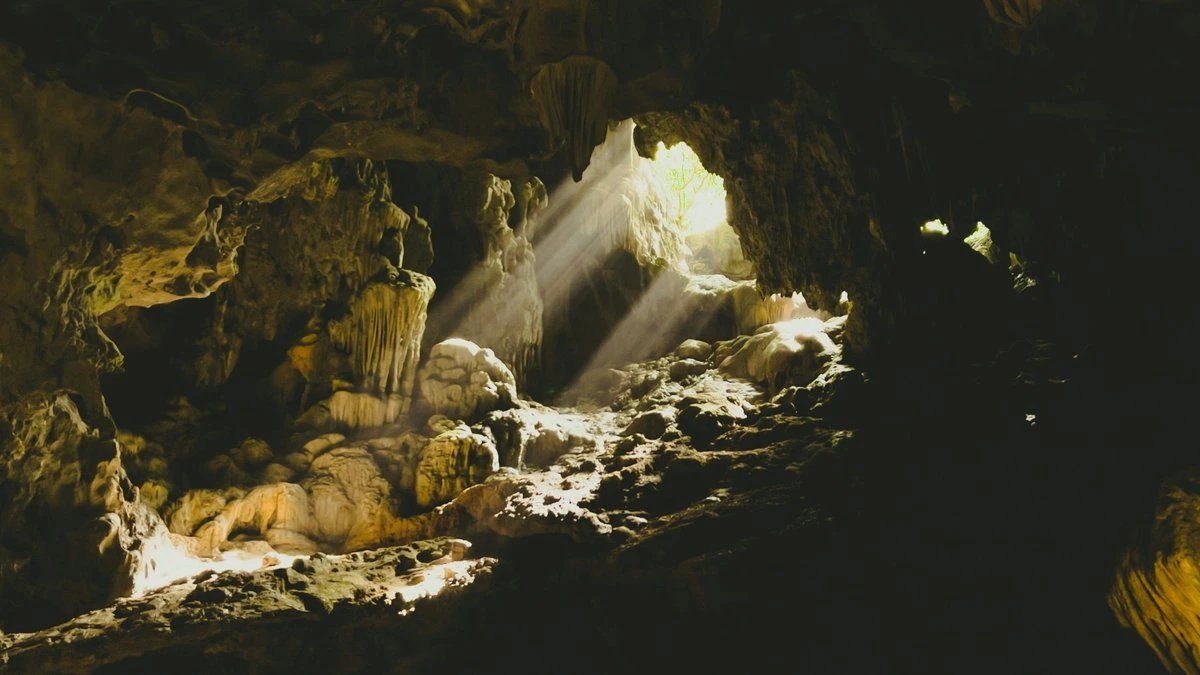
Bianfu Cave is a cavity in an abandoned quarry in Yunnan Province, southwestern China. In 2019, workers preparing the quarry for ecological restoration discovered bones, and subsequent excavations yielded thousands of artifacts. The team led by archaeologist Ruan Qijun from the Yunnan Provincial Institute of Cultural Relics and Archaeology continues to study samples from the cave. The cave has been declared a protected monument.
Denisovan Identification and Lifestyle
Protein fragment analysis, more reliable than DNA for such ancient remains, identified five Denisovan specimens among the finds. The Denisovan remains lay in two sediment layers dated to 167,000–134,000 years ago, indicating occupation for at least 30,000 years and possibly up to 120,000 years. Many stone tools were made with a few strikes for single-use tasks, a style archaeologists call 'expedient'. Bones of large and medium-sized mammals, mostly adult animals including deer, suggest successful hunting. Some bones show cut marks and evidence of marrow extraction.
Denisovan History and Legacy
Denisovans were described in 2010 after DNA sequencing of a finger bone from Denisova Cave in the Russian Altai. Later remains were identified by proteins: a jawbone on the Tibetan Plateau and on the bottom of the Taiwan Strait, and in 2025 a skull found near Harbin, China, was recognized as Denisovan. Traces of ancient interbreeding persist in modern human genomes, with the highest Denisovan DNA found in people of Papua New Guinea. Researchers hope to find DNA in the cave samples and determine whether Denisovans were its only inhabitants.
1 source
Time · lag behind first