
Ulytau region to deploy seismic monitoring near mining sites
This digest was compiled by AI from multiple sources — links to the originals are below.
Kazakhstan's Ulytau region will deploy seismic monitoring across the region, including near mining sites, following a safety inspection at the Zhomart mine. The data will be integrated into the national seismological network. The decision was announced after a visit by Emergencies Minister Murat Mukhanov to the mine, where he inspected underground workings at a depth of over 600 meters.
Key Facts
- The Zhomart mine produces 4.1 million tonnes of copper ore annually.
- The mine has been operating since 2006 and specializes in underground copper ore extraction.
- Following the 2025 accident, Kazakhmys was instructed to improve safety, including implementing automated gas detection systems.
- As of June, 39 of 45 special program measures were completed, with safety investments exceeding 2.7 billion tenge.
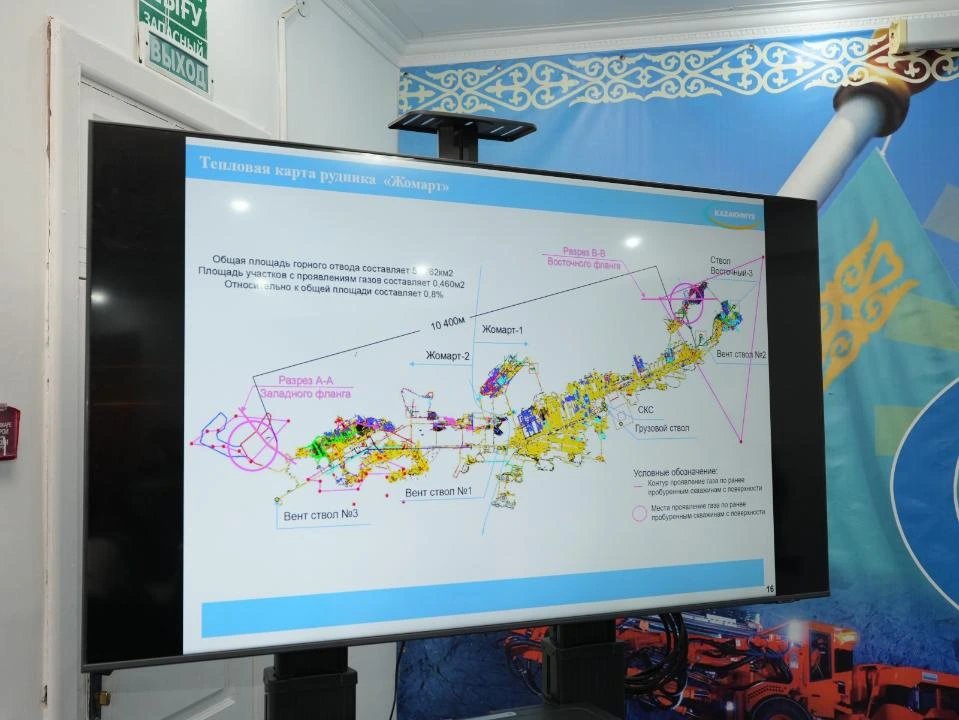
- In 2025–2026, specialists conducted eight comprehensive studies, including gas regime, ventilation, hydrogeological conditions, and rock burst hazard.
Seismic Monitoring Plan
Authorities decided to organize seismic monitoring across the entire Ulytau region, with special attention to areas where deposits are located. The system is intended to be integrated into the seismological network of the National Nuclear Center of the Republic of Kazakhstan (NNCSNI). Authorities will separately consider developing a detailed seismic zoning map of the region. The Ministry of Emergency Situations has not yet announced the timeline for launching the system or preparing the zoning map.
Zhomart Mine Inspection
Emergencies Minister Murat Mukhanov, accompanied by regional akim Eset Baiken and Kazakhmys board chairman Ruslan Oskenbai, visited the Zhomart mine. The minister descended to a depth of more than 600 meters and inspected the organization of control in underground workings. The mine operates an automated gas control system with stationary instruments, and employees additionally use portable gas analyzers. The minister was also shown ventilation and dispatch control systems, which are of particular importance after the 2025 accident.
2025 Accident Aftermath
A government commission established that the main cause of the 2025 accident was methane accumulation and release from the mine workings, followed by an explosion from an electrical equipment spark. The commission also reported significant violations of industrial safety and labor protection. After the investigation, Kazakhmys was instructed to improve the facility's safety, including implementing automated gas detection systems.
1 source
Time · lag behind first