
Citizen scientists revived NASA's ISEE-3 probe in 2014 and fired its thrusters for the first time since 1987
This digest was compiled by AI from multiple sources — links to the originals are below.
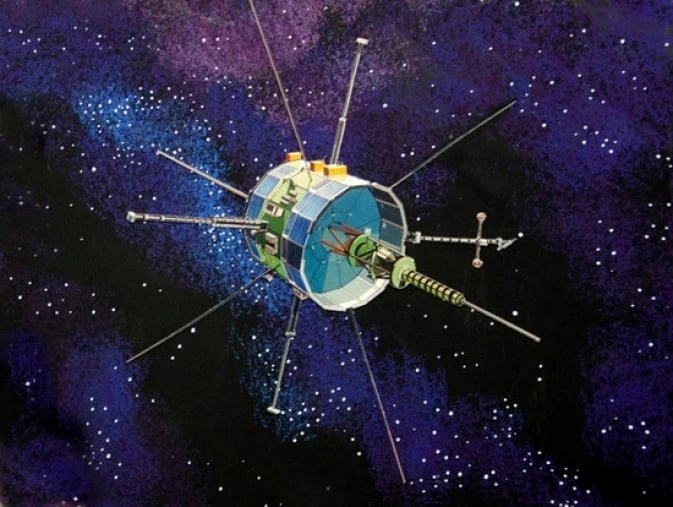
A publicly financed group of engineers and radio specialists revived NASA's long-retired ISEE-3 spacecraft in 2014, firing its thrusters for the first time since 1987. The ISEE-3 Reboot Project secured NASA's permission and used software-defined radio and large radio telescopes to command the probe. The revival attempt ultimately failed when a larger trajectory-changing burn faded, likely due to loss of nitrogen pressurization.
Key Facts
- On 2 July 2014, ISEE-3 fired its hydrazine thrusters for the first time since 1987, with eleven short pulses returning its spin to the original operating range.
- A larger trajectory-changing burn attempted six days later faded quickly, and telemetry indicated the spacecraft had lost nitrogen gas used to pressurize the propulsion system.
- NASA launched ISEE-3 on 12 August 1978 as part of a joint programme with the European Space Agency, and it became the first spacecraft placed in a halo orbit around a Lagrange point.
- Renamed the International Cometary Explorer, the probe passed about 7,862 kilometres from the nucleus of Comet 21P/Giacobini-Zinner on 11 September 1985, becoming the first spacecraft to encounter a comet.
- NASA formally terminated ISEE-3 operations and support on 5 May 1997, although the transmitter was left active for tracking.
The 2014 Reboot Effort
The ISEE-3 Reboot Project secured NASA's permission and assembled a modern command system around software-defined radio hardware. The team reached the spacecraft through some of the world's largest radio telescopes. On 2 July 2014, the probe fired its hydrazine thrusters for the first time since 1987. Eleven short pulses returned its spin almost exactly to the original operating range. Six days later, the team attempted a much larger manoeuvre needed to reshape its path through the Earth-Moon system, but that burn quickly faded.
Propulsion Failure Analysis
The failure was probably not an empty hydrazine tank. Telemetry indicated that the spacecraft had lost the nitrogen gas used to pressurise the propulsion system. Fuel could remain aboard, but without pressure to push it through the plumbing, it could not reach the thrusters.
Mission History and Legacy
NASA launched the International Sun-Earth Explorer 3 on 12 August 1978 as part of a joint programme with the European Space Agency. Its first destination was the Earth-Sun L1 region, about 1.5 million kilometres sunward of Earth. ISEE-3 became the first spacecraft placed in a halo orbit around a Lagrange point. After the primary mission, NASA redirected it through Earth's long magnetic tail and used five lunar flybys to send it toward Comet 21P/Giacobini-Zinner. Renamed the International Cometary Explorer, it passed about 7,862 kilometres from the comet's nucleus on 11 September 1985.
1 source
Time · lag behind first