
Anak Krakatau eruption sends ash 15 km high, disrupts 3,000 flights
This digest was compiled by AI from multiple sources — links to the originals are below.
Anak Krakatau's prolonged explosive eruption on September 5 sent volcanic ash to altitudes of up to 15,000 meters and forced the closure of eight airports across Java and Sumatra. Nearly 3,000 flights were disrupted, and ash fell over Jakarta and other parts of West Java. Airports resumed operations by September 8, even as the volcano remained at the second-highest alert level.
Key Facts
- The eruption on September 5 sent ash to 6,000 meters east of the volcano and up to 15,000 meters to the west, according to Indonesia's meteorological agency.
- Eight airports across Java and Sumatra were temporarily closed, disrupting nearly 3,000 flights.
- Ash fell over Jakarta and other parts of West Java, with the Indonesian Humanitarian Coordination Platform reporting communities east of the volcano as particularly affected.
- Anak Krakatau remained at the second-highest alert level on Indonesia's volcanic warning scale, a status it has held since early July.
Eruption and Ash Plume
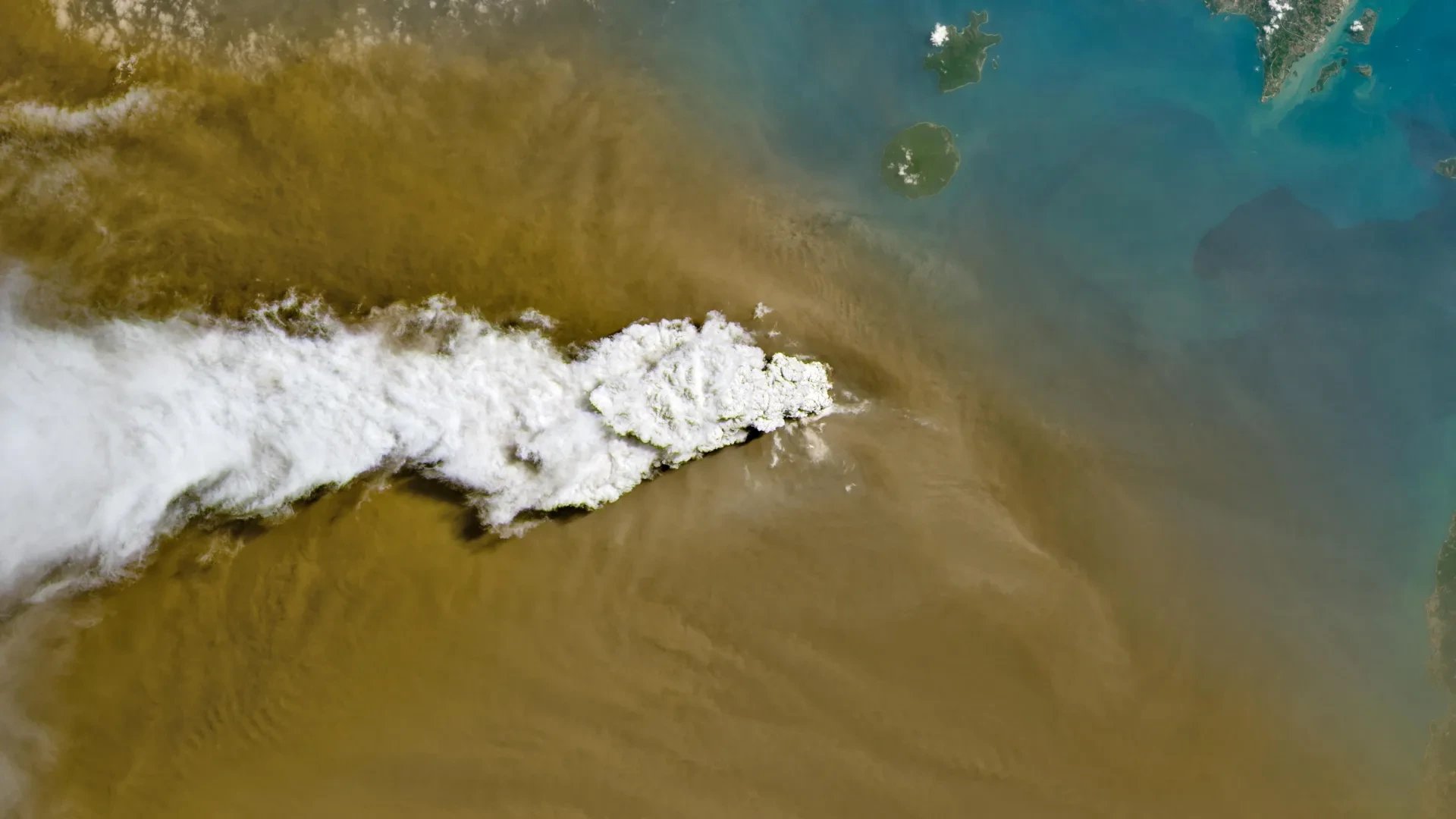
Anak Krakatau entered a prolonged explosive phase in early September 2026 that lasted more than 24 hours, sending large amounts of gas and ash into the sky. Satellites observed the eruption on September 5, with a Landsat 8 image showing a bright white plume of volcanic gas rising above a darker brown ash cloud. By September 6, Indonesia's meteorological agency reported ash at altitudes of up to 6,000 meters east of the volcano and as high as 15,000 meters to the west. The sustained explosive activity weakened on September 6, shifting back toward a more typical pattern of Strombolian eruptions with periodic bursts of ash.
Flight Disruptions and Air Quality
The high concentration of volcanic ash forced the temporary closure of eight airports across Java and Sumatra. Nearly 3,000 flights into and out of the affected region were disrupted, according to news reports. Ash fell over populated areas, with the Indonesian Humanitarian Coordination Platform reporting that communities east of Anak Krakatau, including Jakarta and other parts of West Java, were particularly affected. Volcanic ash can irritate the respiratory system, eyes, and skin, and the IHCP noted that it differs from peatland fire smoke in particle properties and required protective measures. Airports had resumed operation by September 8, even as Anak Krakatau remained at the second-highest alert level.
1 source
Time · lag behind first