
Nepal floods expose gaps in Himalayan early-warning systems
This digest was compiled by AI from multiple sources — links to the originals are below.
A glacial lake outburst flood in Nepal's Rasuwa district on August 26 killed more than 1,400 people and left at least 6,000 missing across Nepal and Tibet. The disaster destroyed 12 hydropower plants and exposed weaknesses in early-warning systems designed for single hazards. Scientists say the event's energy exceeded the Hiroshima atomic bomb, underscoring the challenge of warning communities in high-altitude terrain.
Key Facts
- The August 26 flood in Nepal's Rasuwa district killed more than 1,400 people and left at least 6,000 missing in Nepal and Tibet.
- Twelve hydropower plants were destroyed, along with roads, bridges and homes.
- Basanta Raj Adhikari, director of the Centre for Disaster Studies at Tribhuvan University, estimated the event's energy exceeded that of the Hiroshima atomic bomb.
- ICIMOD warned in July that a below-normal monsoon should not be interpreted as a safer one.
The August 26 Disaster
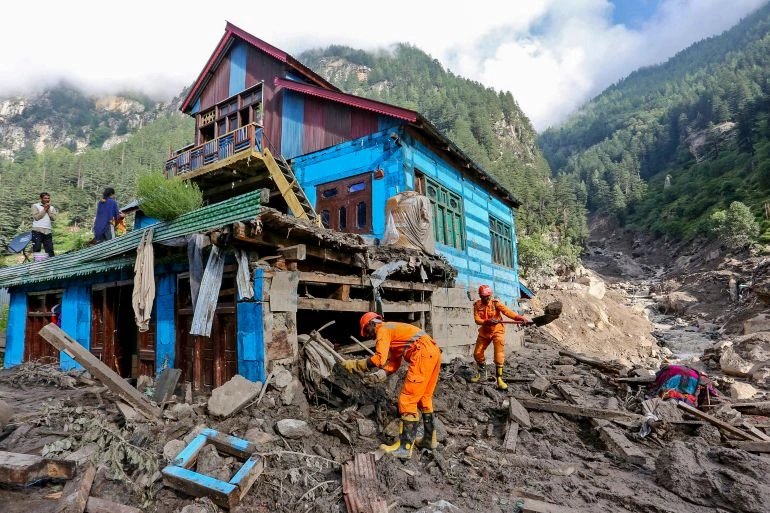
On August 26, a mass of ice and rock broke loose high in the Himalayas above Nepal's Rasuwa district and sent a violent surge of water, mud and debris down the Lhende Khola River. The torrent travelled through valleys, swept away settlements and infrastructure, and eventually reached the Nepal-China border. By mid-September, more than 1,400 people had been reported dead and at least 6,000 remained missing in Nepal and across the border in Tibet. Twelve hydropower plants were destroyed, while roads, bridges and homes were buried or washed away.
Early-Warning System Gaps
Many early-warning systems are built around a particular hazard such as rainfall, river level or glacial lake outburst flood, but the Himalayas do not always respect those categories. The August disaster exposed a weakness in the way early-warning systems are often designed, as an avalanche can block a river, form a temporary lake, and then release as a debris flow that destroys infrastructure downstream. In July, the International Centre for Integrated Mountain Development (ICIMOD) warned that a below-normal monsoon should not be interpreted as a safer one. Saswata Sanyal, a disaster risk reduction specialist at ICIMOD, said a drier monsoon can still be a dangerous monsoon, as seasonal averages cannot capture the cloudbursts capable of producing catastrophic flooding in mountain valleys.
1 source
Time · lag behind first