
RBI deputy governor flags cash paradox as India's banknote stock hits 176 billion
This digest was compiled by AI from multiple sources — links to the originals are below.
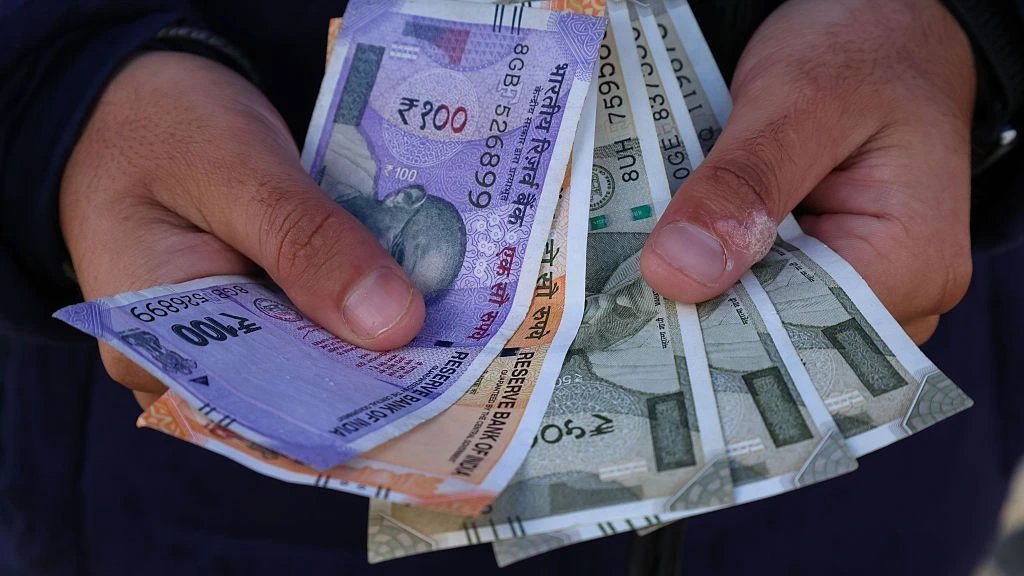
India's central bank now has 176 billion banknotes in circulation, printing 28-30 billion fresh notes annually while retiring roughly 21 billion. Deputy Governor Shirish Chandra Murmu called the combination of double-digit cash growth and surging digital payments a 'cash paradox' that complicates production planning. The RBI's stock far exceeds the 56 billion US dollar bills and 30 billion euro banknotes in circulation globally.
Key Facts
- The Reserve Bank of India has 176 billion banknotes in circulation and prints 28-30 billion fresh notes annually across six denominations.
- RBI Deputy Governor Shirish Chandra Murmu said currency in circulation continues to grow at double-digit rates even as cash's share of individual transactions declines.
- About 56 billion US dollar bills and 30 billion euro banknotes were in circulation at the end of last year, according to Murmu.
- 94% of transactions in India were cash-based as recently as 2019, according to research by Anirudh Tagat, Mehmet Ozmen and Pushpa Trivedi.
- Cash reaches the public through the RBI's 19 regional offices, bank branches, more than 250,000 ATMs and cash dispensers, and millions of business correspondents.
The Cash Paradox
RBI Deputy Governor Shirish Chandra Murmu described the simultaneous growth of cash and digital payments as the 'cash paradox' in a speech to central bankers in Jakarta last month. He said the combination makes future demand harder to predict, complicating planning for production and distribution capacity. Economist Anirudh Tagat told the BBC that India is a unique case study of the cash paradox given the scale of both cash and non-cash payments. Tagat noted the phenomenon has been especially prominent since the 2007-08 global financial crisis, with Bank for International Settlements research showing a similar pattern worldwide.
Cash Distribution Network
Cash reaches the public through the RBI's 19 regional offices, bank branches, more than 250,000 ATMs and cash dispensers, and millions of business correspondents. Business correspondents are local agents who provide basic banking services in rural areas and smaller towns. The RBI's banknote count is partly driven by a higher share of lower-value notes, meaning more notes are needed to handle the same value of transactions.
Currency's Three Roles
In Tagat's framing, currency serves three purposes: a means of payment, a store of value, and a hedge against calamity. Digital payment apps are replacing only the first purpose, which helps explain why digital payments alone cannot tell the whole story of cash demand. Unified Payments Interface digital transactions are surging towards a billion a day, yet cash sloshing around the economy keeps climbing at a brisk pace.
1 source
Time · lag behind first