
BRICS statement seeks IMF, World Bank reform without naming US
This digest was compiled by AI from multiple sources — links to the originals are below.
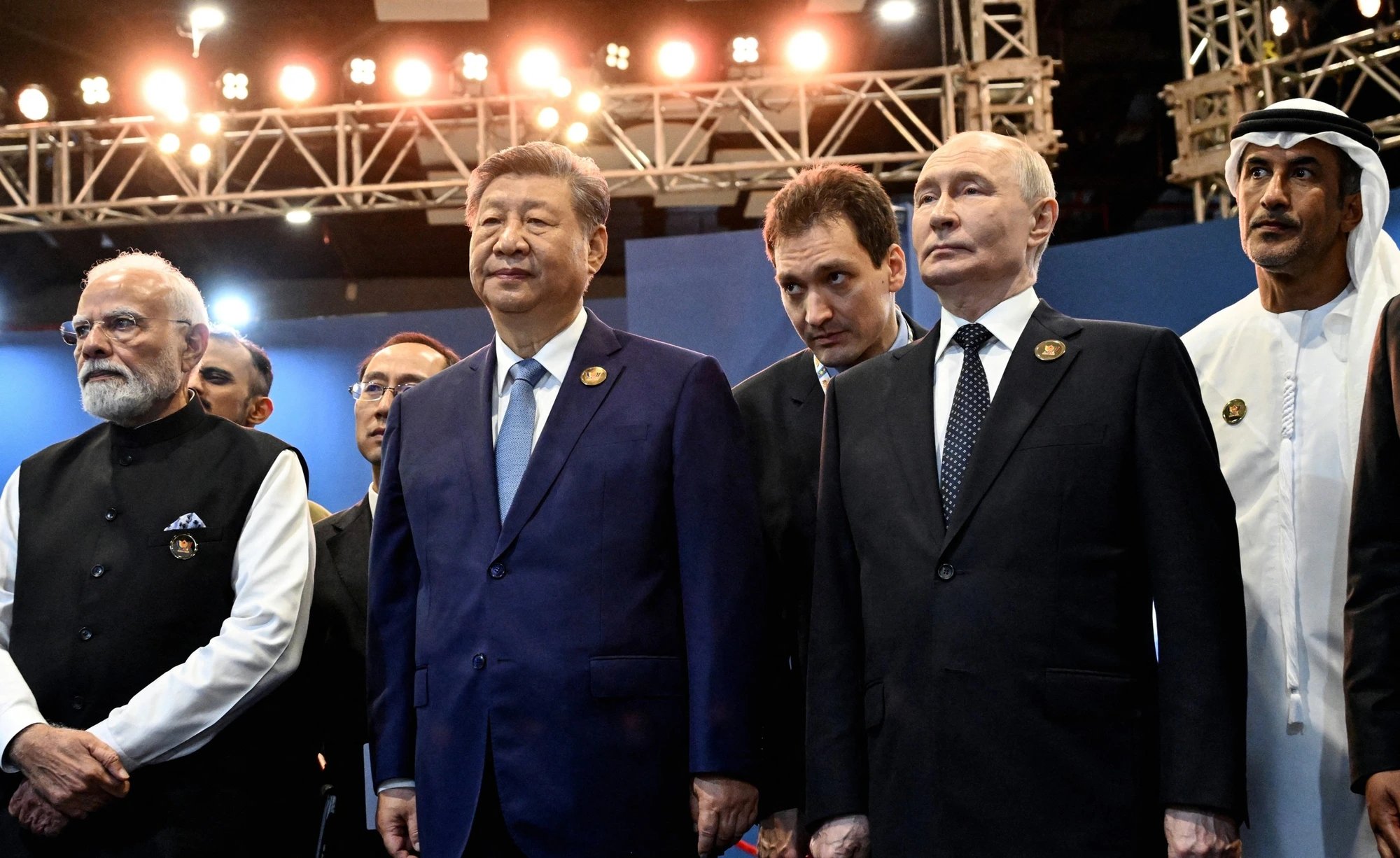
BRICS leaders adopted a 140-point joint statement on September 12 calling for reforms of the IMF, World Bank and WTO to give developing countries a greater voice. The statement avoided direct criticism of the United States and made no mention of the Russia-Ukraine conflict. India, the summit host, acted as a brake on de-dollarization efforts.
Key Facts
- The BRICS joint statement adopted on September 12 contains 140 points calling for reforms of the WTO, IMF and World Bank.
- The statement criticizes trade-restrictive actions and protectionism but does not name the United States or President Trump.
- The statement makes no mention of the Russia-Ukraine conflict, a result described as a clear win for the Kremlin.
- Kazakhstan and Uzbekistan are BRICS partner countries, while India, China, Iran and Russia are permanent members.
- Uzbek President Shavkat Mirziyoyev skipped the summit in New Delhi for a state visit to South Korea.
Joint Statement
BRICS members adopted a 140-point joint statement on September 12 that called for major reforms of Western-dominated financial institutions, including the WTO, IMF and World Bank. The statement noted a proliferation of trade-restrictive actions inconsistent with WTO rules, including rising tariffs and protectionism under environmental pretexts. It did not mention the United States or Trump by name and called for maximum restraint from all sides in the Gulf war. The statement made no mention of the Russia-Ukraine conflict, which was seen as a clear win for the Kremlin.
Divisions and Diplomacy
India, the summit host, acted as a brake on efforts to de-dollarize the global economy. Iranian President Masoud Pezeshkian met Abu Dhabi Crown Prince Khaled bin Mohamed bin Zayed, a meeting designed to counter the image of US economic isolation of Tehran. Uzbek President Shavkat Mirziyoyev skipped the summit for a state visit to South Korea, where he promoted stronger economic ties. South Korea will host a C5+1 gathering of leaders from all five Central Asian states in Seoul on September 16. Kazakh President Kassym-Jomart Tokayev adopted a middle-of-the-road stance consistent with Kazakhstan's multi-vector foreign policy.
1 source
Time · lag behind first