
Cheap Chinese solar panels reshape global power generation
This digest was compiled by AI from multiple sources — links to the originals are below.
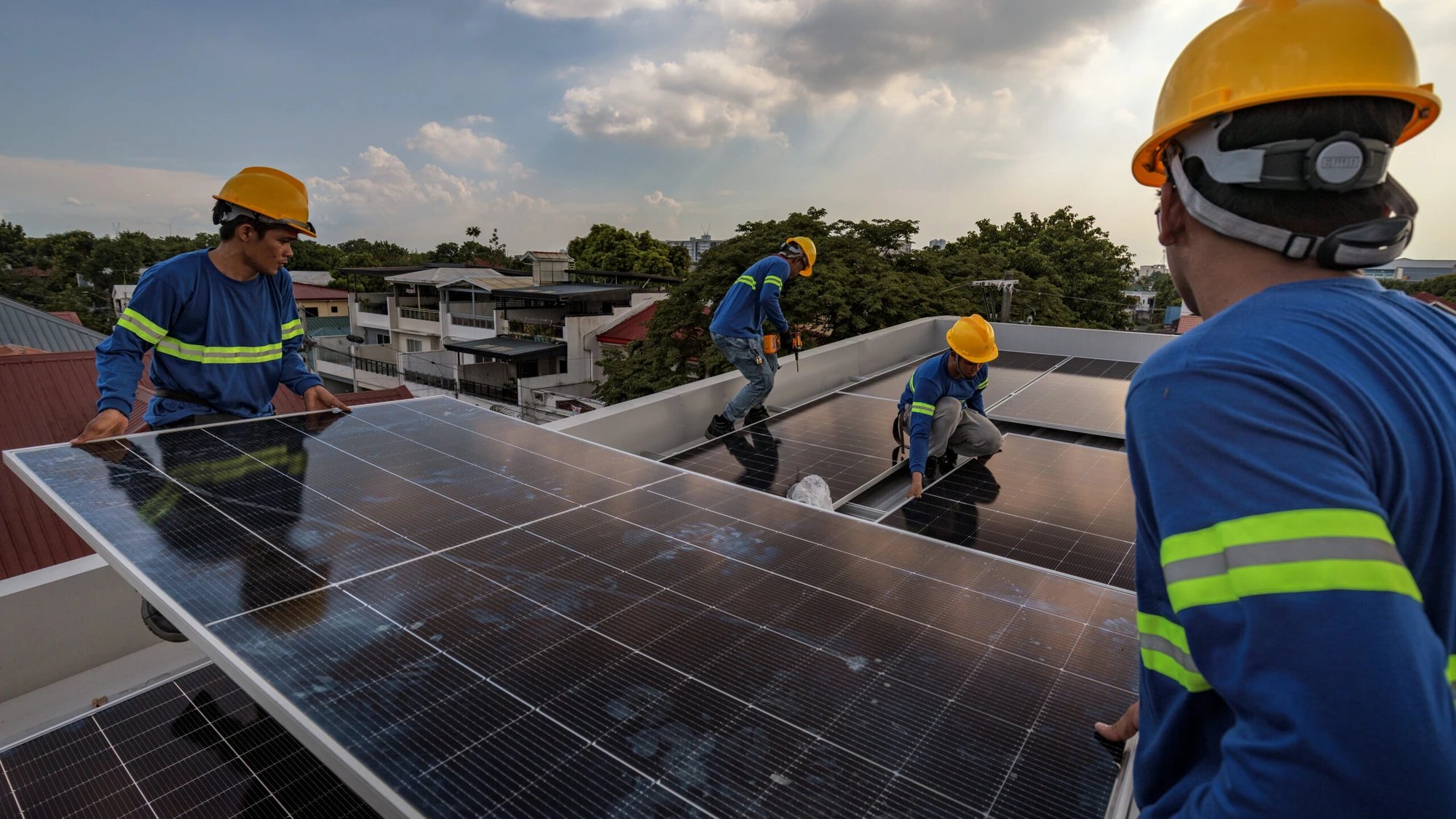
Chinese-made solar panels are driving a surge in rooftop and small-scale generation worldwide, with global capacity reaching almost 1.2 terawatts at the end of 2025. Businesses and households in developing and industrialized countries are cutting energy costs and gaining reliable power. The shift is straining traditional utilities and grid infrastructure as they adapt to decentralized supply.
Key Facts
- Global small-scale solar capacity reached almost 1.2 terawatts at the end of 2025, according to the Energy Institute's Statistical Review of World Energy.
- Bestway Cement's Chakwal plant in Pakistan will add 6.34 megawatts of solar generation by the end of the year, on top of 26 MW already installed.
- Rooftop solar capacity in the Philippines almost doubled in the 12 months to April.
- The UK and several US states have approved the sale of low-cost plug-and-play solar panels already common in parts of Europe.
- A day-long blackout across much of Spain and Portugal last year illustrated the grid-management challenges of decentralized generation.
Rooftop Solar Expansion
Rooftop solar capacity in the Philippines is estimated to have almost doubled over the 12 months to April. In Chakwal, Pakistan, Bestway Cement is converting dry earth and olive and peach groves into a solar farm. The company will add 6.34 megawatts of generation capacity by the end of the year, in addition to 26 MW of photovoltaic cells already in place. Solar already generates over a quarter of the electricity powering the Chakwal cement plant, which produces over 3 million tonnes of cement per year. General manager Abdul Waheed said rivals have already moved in the same direction.
Grid and Utility Impact
The rise of domestic generation is starting to undermine the economics of power generation and distribution in some countries. Utilities need to invest heavily in re-engineering grids to allow power to flow both to and from consumers. The UK and several US states have approved the sale of low-cost plug-and-play solar panels already widely available in other parts of Europe. Some fear such equipment will introduce more unpredictability to forecasting and managing overall power demand. A day-long blackout across much of Spain and Portugal last year dramatically illustrated that challenge.
1 source
Time · lag behind first