
US aviator describes free-fall after F-15E shot down over Iran
This digest was compiled by AI from multiple sources — links to the originals are below.
A US Air Force officer described free-falling with a damaged parachute after his F-15E was shot down over Iran in April. The aviator, identified as Bravo, spoke in his first interview on CBS's 60 Minutes, recounting a 48-hour evasion before rescue by US special forces. The incident occurred during the seventh month of the US-Israel war against Iran.
Key Facts
- Bravo hit the ground at 70–100 mph (113–161 km/h) and broke his back, shoulder, and arm.
- The $30 million F-15E was downed by a shoulder-fired missile costing about $100,000.
- Alpha was rescued within six hours; Bravo was rescued after 48 hours behind enemy lines.
- Over 90 US service members operated inside Iran during the rescue, the first such operation in 46 years.
- Two destroyed US aircraft were worth about $100 million each, and several Little Bird helicopters were also destroyed.
The Shootdown
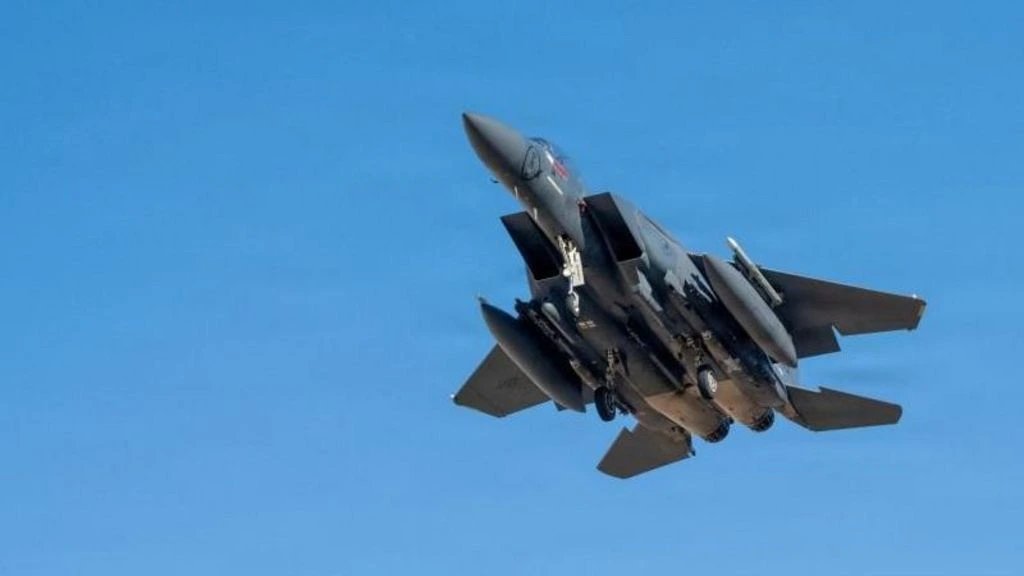
A US Air Force officer described free-falling to the ground with a damaged parachute after his plane was shot down over Iran. The aviator, identified as Bravo, said looking up and seeing no parachute was the most terrifying thing he had ever seen. The $30 million two-seat F-15E was taken down by a shoulder-fired missile costing around $100,000. Bravo said he was not focused on his falling speed but on trying to correct problems and unfurl the parachute. He called his survival a miracle despite breaking his back, shoulder, and arm, and hitting the ground at 70–100 mph.
Rescue Operation
The two US troops ejected from the damaged plane, were separated, and had to evade Iranian forces while awaiting rescue. Alpha was rescued within six hours in an operation involving intense fighting, according to US Secretary of Defense Pete Hegseth. Bravo was rescued after 48 hours behind enemy lines, hiking and climbing to a ridgeline in fear of Iranian forces. At one point over 90 US service members were on the ground inside Iran, said Central Command Admiral Brad Cooper. Planes and helicopters needed for evacuation became stuck in desert sand and were destroyed while special forces awaited backup.
War Context
The operation came about five weeks into the war against Iran, launched by the US and Israel. Now in its seventh month, the war has become increasingly unpopular among the US public ahead of November's congressional midterm elections. Much of the dissatisfaction stems from a steep rise in global energy prices and knock-on effects on other goods. Last week, US President Donald Trump predicted the war would continue until at least election day on 3 November.
1 source
Time · lag behind first