
AfD's Saxony-Anhalt win signals Russia-friendly shift in German politics
This digest was compiled by AI from multiple sources — links to the originals are below.
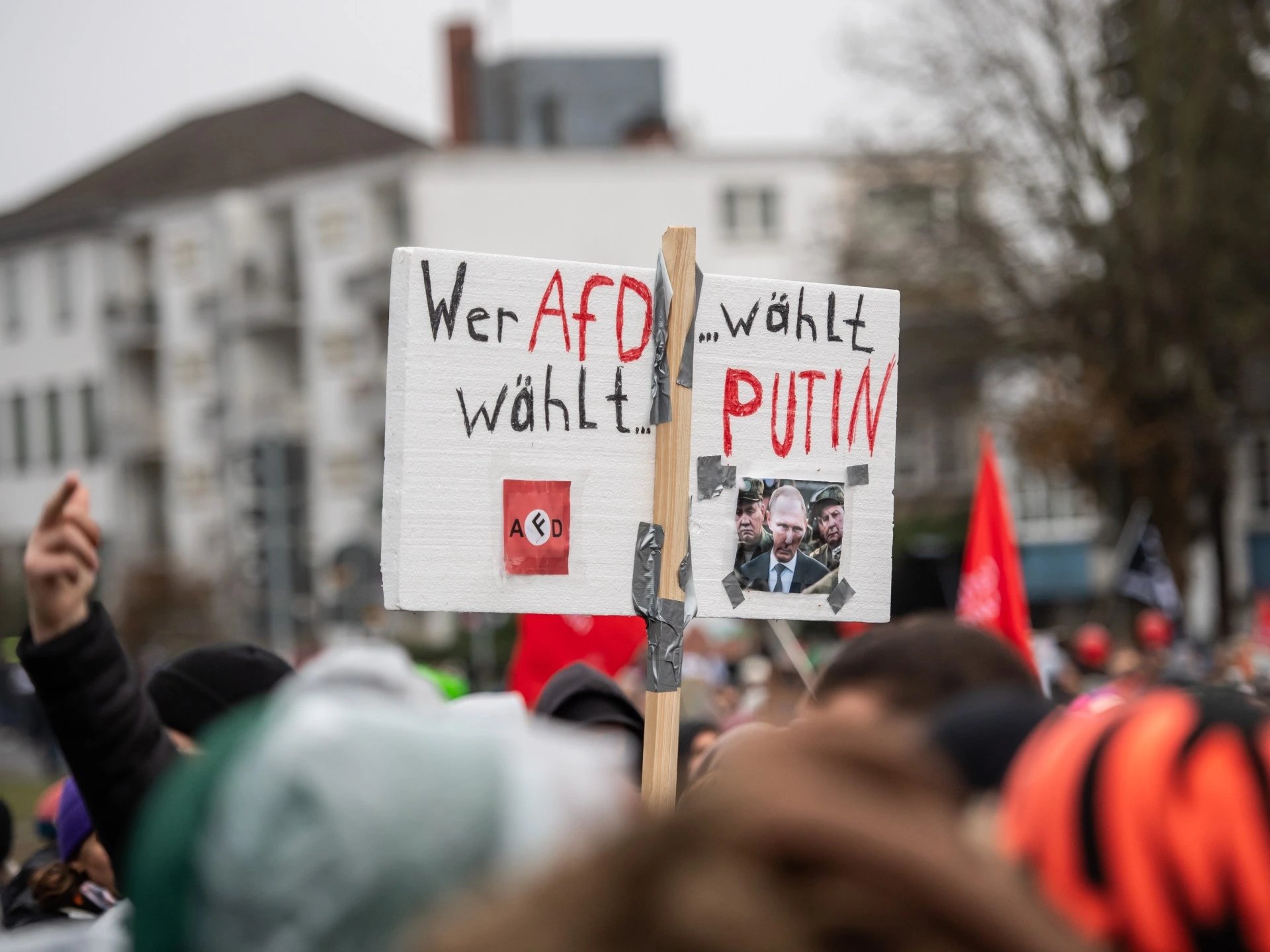
The far-right Alternative for Germany (AfD) won the Saxony-Anhalt regional election, bringing the prospect of a Russia-friendly party running a government in a core EU member state. The victory comes as AfD leads national polls by six to seven points over Chancellor Friedrich Merz's CDU. The result may test Germany's firewall against far-right coalitions, with Russia seen as a potential glue for such a partnership.
Key Facts
- AfD won the Saxony-Anhalt regional election, positioning a Russia-friendly party to run a government in a core EU member state.
- AfD leads national polls by six to seven percentage points over Chancellor Friedrich Merz's CDU.
- AfD came first in Thuringia's 2024 provincial elections, showing strong appeal in former East Germany.
- The Sahra Wagenknecht Alliance (BSW) shares AfD's positions on cutting military aid to Ukraine, peace negotiations with Russia, and lifting EU sanctions.
- Marine Le Pen might win France's 2027 presidential election, according to current polls.
AfD's Electoral Surge
AfD's success in Saxony-Anhalt brings the prospect of a Russia-friendly party running a regional government in a core EU member state. The far-right party is buoyed by dissatisfaction with Chancellor Friedrich Merz and its promises to clamp down on immigration, curtail LGBTQ rights, and roll back the transition to renewable energy. AfD's appeal is particularly strong in former East Germany, having already come first in the 2024 provincial elections in Thuringia. Nationally, AfD polls six to seven percentage points ahead of the governing Christian Democratic Union (CDU). Unless the CDU bounces back, the populist hardliners would have the largest caucus in the next Bundestag.
Potential Coalition Dynamics
Mainstream parties might struggle to uphold the firewall (Brandmauer) keeping AfD, whose ranks include neo-Nazis, out of office. Saxony-Anhalt could prove a testing ground for a coalition headed by the far right. Russia could provide at least some of the glue for such a partnership. AfD is courting potential support on the left, for example, the Sahra Wagenknecht Alliance (BSW), a splinter from the Die Linke party. Sahra Wagenknecht argues for cutting military aid to Ukraine, peace negotiations with Russia, and lifting EU sanctions, views that resonate with Putin's criticism of Europe going woke.
France's Parallel Shift
While Merz and the CDU have a longer time horizon, President Emmanuel Macron is on the way out. Marine Le Pen might well turn out to be the winner in the 2027 presidential election. Current polls suggest she might be able to beat a mainstream candidate.
1 source
Time · lag behind first