
Germany's balcony solar boom surpasses one million registered units
This digest was compiled by AI from multiple sources — links to the originals are below.
Germany's official registry passed one million balcony solar power plants by mid-2025, with community estimates counting millions more sold. The plug-in systems, costing around 500 euros, install without electricians or permits and can cut a small household's electricity bill by 10 to 25 percent.
Key Facts
- Germany's official registry passed one million balcony solar power plants by mid-2025.
- Roughly 55 percent of German households rent, the highest share in the EU.
- Each balcony plant may feed at most 800 watts into the apartment.
- A typical system yields 600 to 900 kilowatt-hours a year, saving about 300 kilograms of CO2 annually.
- Berlin and Munich offer city subsidies up to 500 euros for balcony solar kits.
The Balcony Power Plant
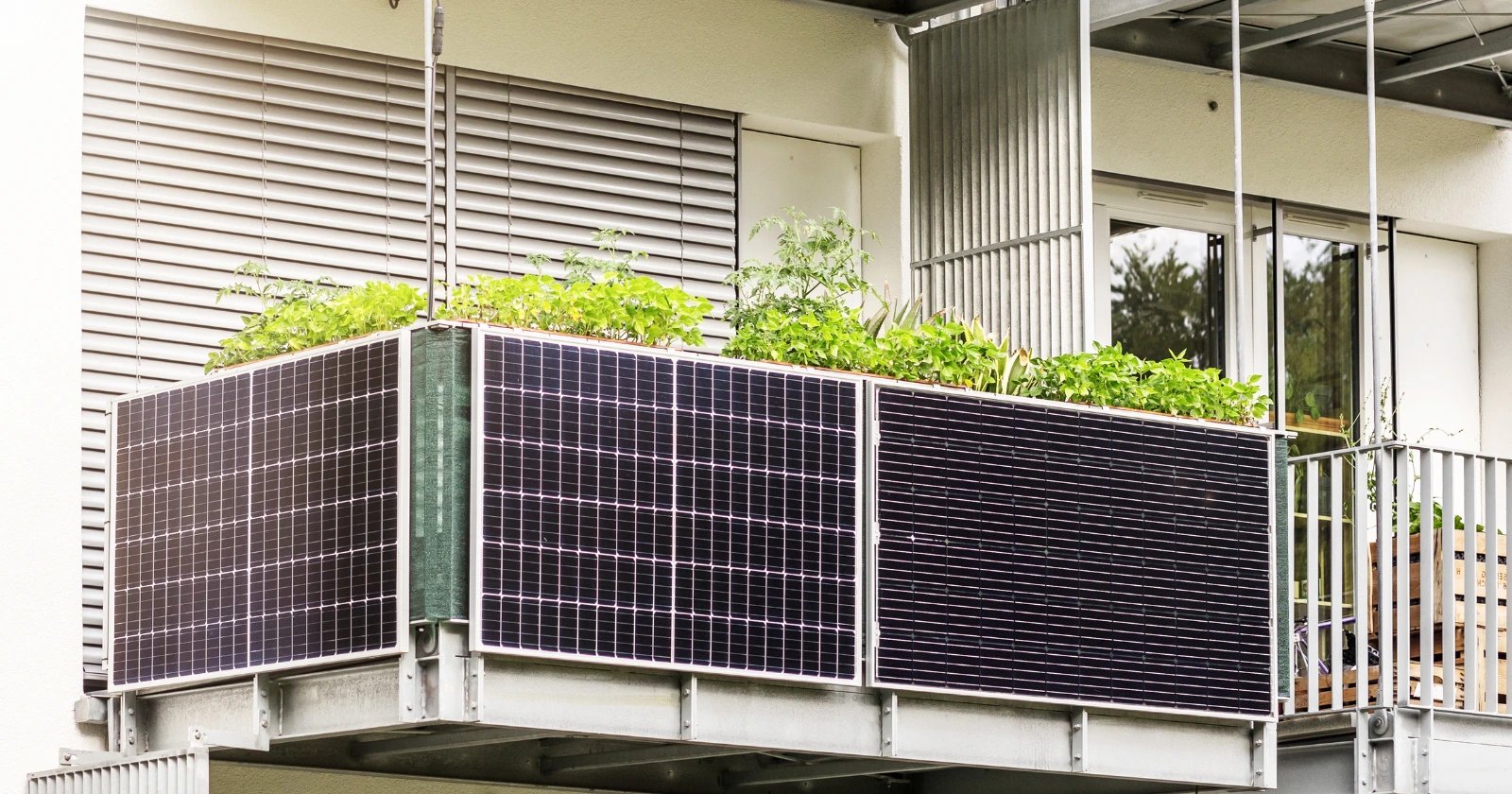
The most successful solar program in Europe involves no roofs, no installers, no permits and no ladders. Sold in German supermarkets for around 500 euros, the kit bolts one or two panels to a balcony railing and plugs into an ordinary wall socket. Germans call it a Balkonkraftwerk — a balcony power plant — and by mid-2025 the country's official registry had passed one million units. Community estimates count millions more sold, with half a nation's railings slowly turning photovoltaic.
Renter Access
Roughly 55 percent of German households rent — the highest share in the EU — and renters are locked out of standard rooftop solar because the roof belongs to the landlord. German law, rewritten in stages, treats plug-in solar as an appliance rather than an electrical installation, requiring no electrician or grid-operator paperwork. Since the 2024 Solarpaket reforms, a single free online registration takes under half an hour, and landlords and homeowner associations are legally restricted in their ability to refuse tenants the panels. When a tenant moves, the power plant unbolts and moves with them.
The 800-Watt Limit
Each balcony plant may feed at most 800 watts into the apartment — deliberately modest, sized to what old apartment wiring can safely absorb through a socket. A typical system yields 600 to 900 kilowatt-hours a year, trimming perhaps 10 to 25 percent off a small household's bill and saving on the order of 300 kilograms of CO2 annually. Multiply by a million-plus and rising: hundreds of megawatts of capacity added in single half-years, with small battery packs now joining a quarter of new kits. Europe's electricity prices of around 32 to 35 cents per kilowatt-hour, zero VAT on the hardware, and city subsidies up to 500 euros in Berlin and Munich close the payback arithmetic in a few years.
1 source
Time · lag behind first