
FRB method reveals location of universe's missing ordinary matter
This digest was compiled by AI from multiple sources — links to the originals are below.
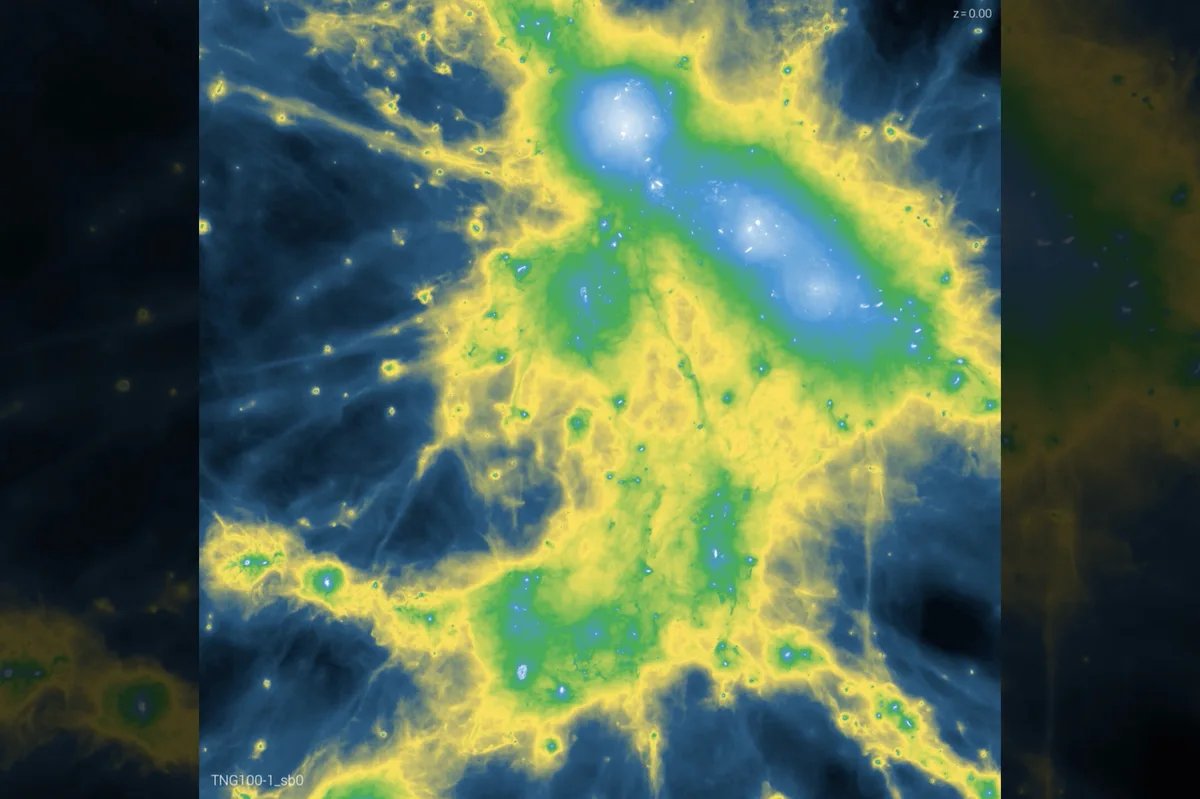
MIT scientists, as part of the CHIME/FRB Collaboration, have developed a new method using fast radio bursts (FRBs) to locate the universe's missing ordinary matter. The team found that this matter resides in diffuse clouds surrounding groups of galaxies, extending farther than predicted. The findings, published in Physical Review Letters, suggest that galactic processes like black hole jets and supernovae are more energetic than previously thought.
The Missing Matter Problem
Physicists have long known that the early universe contained about 83% dark matter and 17% ordinary matter, but observations of stars and galaxies today show less ordinary matter than expected. This discrepancy has puzzled scientists for decades. The new FRB method addresses this by using radio signals to trace matter in intergalactic space.
The FRB Technique
Fast radio bursts are millisecond-long radio flashes from distant energetic phenomena. As they travel, their signals get smeared by intervening matter; more matter causes more smearing. The MIT team measured the smearing of thousands of FRBs detected on Earth and compared each with galaxy locations to separate the contribution from galaxies versus other missing matter. This revealed that missing matter exists in diffuse clouds around galaxy groups, extending much farther than predicted.
Implications for Galactic Activity
The findings support the idea that matter is ejected from galaxies via black hole jets, supernovae, and other energetic processes. According to MIT graduate student Haochen Wang, more galaxies correlate with more missing matter around them. Co-author Kiyoshi Masui noted that these measurements indicate star and black hole activity is stronger and more violent than models predicted.
1 source
Time · lag behind first