
Quantum gravity theory links entropy, dark energy, and life
This digest was compiled by AI from multiple sources — links to the originals are below.
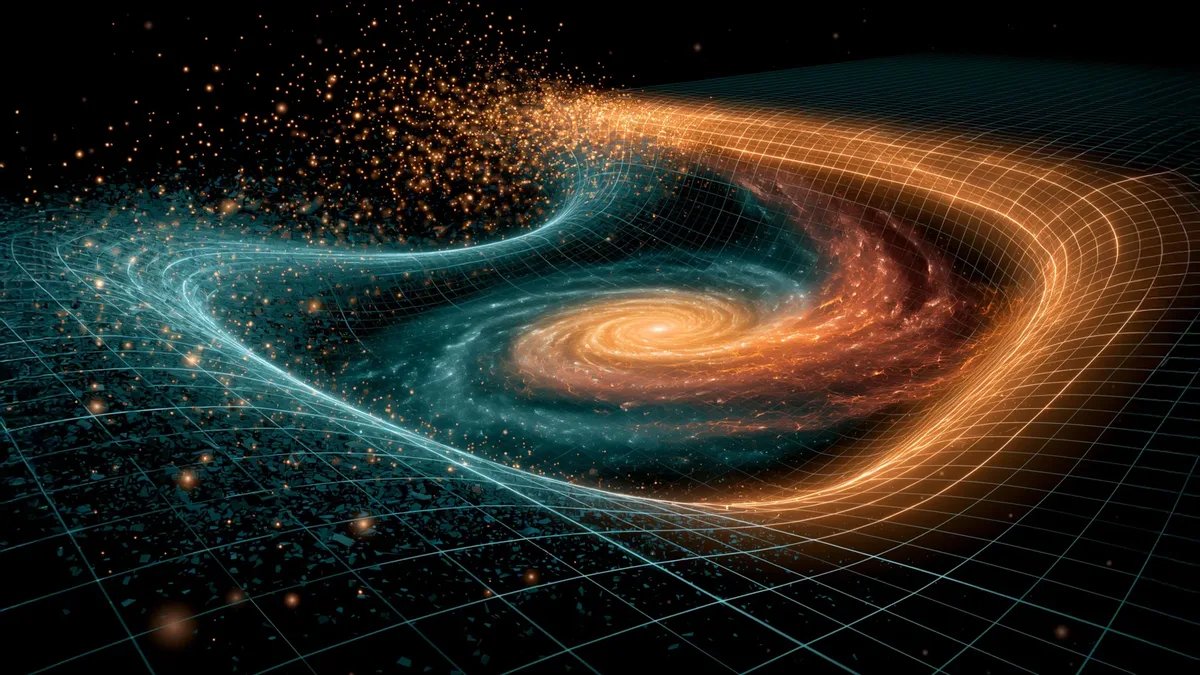
A new theoretical study from Queen Mary University of London proposes that cosmic expansion allows order and life to emerge even as the Universe's total entropy increases. Mathematician Ginestra Bianconi used the Gravity from Entropy framework to show that entropy per unit volume falls during expansion, enabling local complexity. The work addresses a long-standing puzzle in cosmology: how galaxies, stars, and life formed despite the second law of thermodynamics.
The Entropy Puzzle
The second law of thermodynamics states that total entropy in an isolated system increases over time. Entropy measures how energy and information are distributed, often linked to disorder. Cosmologists face a paradox: the early Universe had low entropy, yet matter organized into galaxies, stars, and life as entropy rose. Explaining this coexistence remains unresolved.
Gravity from Entropy Framework
Professor Ginestra Bianconi of Queen Mary University of London published the study in Physical Review D. Her Gravity from Entropy (GfE) theory treats gravity as emerging from quantum-level information and entropy, not as a fundamental force. The analysis shows that while total cosmic entropy increases, entropy per unit volume decreases with expansion. This decline allows local order to form without violating the second law.
1 source
Time · lag behind first