
Central banks reduce dollar reliance, diversify reserves
This digest was compiled by AI from multiple sources — links to the originals are below.
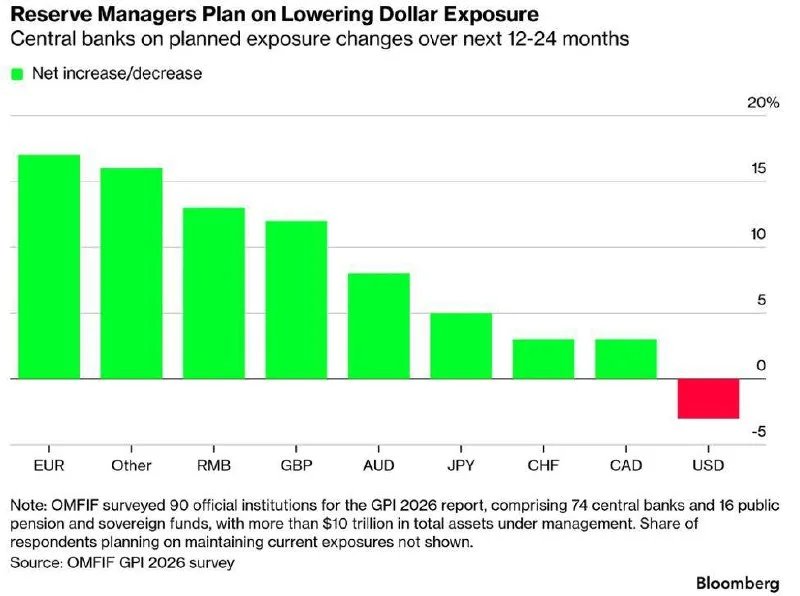
Global central banks are gradually reducing their dependence on the US dollar. According to OMFIF, 4% of regulators plan to cut dollar holdings in reserves over the next 12-24 months, while interest in the euro, yuan, and gold is rising. The dollar's share of global reserves fell to 58% from 60% a year ago, though it remains the largest reserve currency.
Dollar's Declining Share
The US dollar's share of global foreign exchange reserves fell to 58% from 60% a year ago, according to OMFIF data. This decline reflects a broader trend of diversification away from the greenback. The shift is gradual but consistent, with 4% of central banks planning to reduce dollar holdings in the next 12-24 months.
Gold and Alternative Currencies
Central banks are increasingly turning to gold and other currencies. 82% of central banks now hold physical gold, up from 71% a year ago, with 51% citing geopolitical risk protection as the main reason. Interest in the euro and yuan is also growing as reserve assets.
Implications for Reserve Management
The trend toward diversification increases the importance of flexible reserve management, particularly for funds like Kazakhstan's National Fund. As Tengenomika notes, the new standard is not abandoning the dollar but reducing dependence on it. Effective risk management becomes key.
1 source
Time · lag behind first